
Natural Wood Kitchen Cabinets: Timeless Beauty & Durability
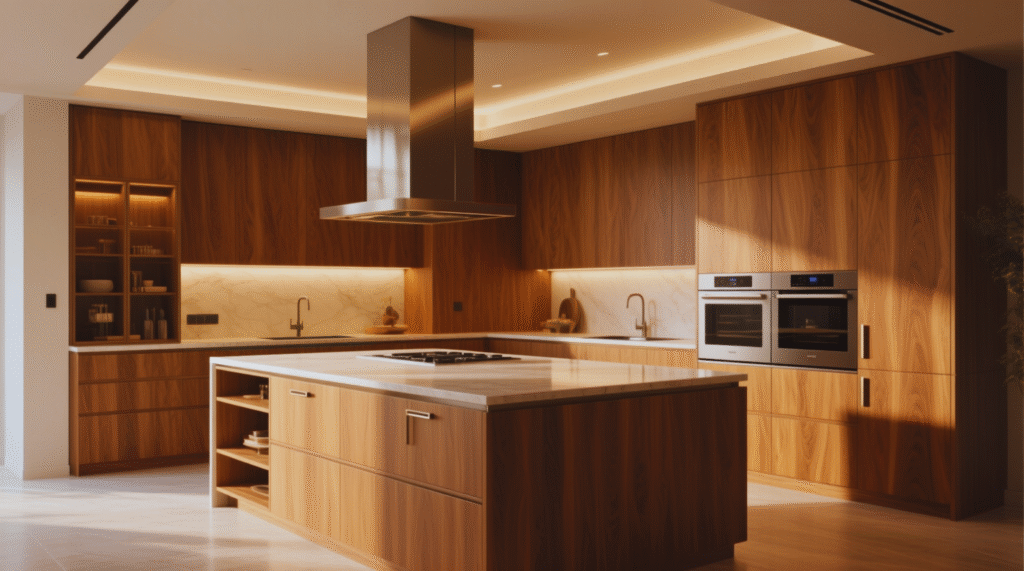
There is a distinct warmth that only organic materials can bring to a room. It grounds the space. While synthetic alternatives attempt to mimic this look (often falling flat), they simply cannot replicate the genuine aesthetic of natural wood kitchen cabinets. You can’t fake that feeling. Whether you lean toward the rustic charm of Hickory or prefer the quieter, refined grain of Maple, our collection delivers high-quality, solid wood options. We designed these lines to do more than look good; they are built to elevate your home’s value and overall style.
Buying natural wood kitchen cabinets is about more than just storage; it is an invitation to bring nature indoors. Real wood varies. Because of this, no two cabinet doors will ever look exactly the same (giving your kitchen a completely custom feel). The grain patterns tell a story. At JWQ Cabinetry, we champion this individual character.
But aesthetics are really just half the equation. You need substance. Our collection balances that raw beauty with the structural reinforced joinery required to handle the chaos of daily life (and we know how chaotic it can get). These cabinets are built to endure. Whether you are looking for a specific species or planning a large-scale renovation, we have the selection to match your vision.
Are Natural Wood Cabinets Still in Style?
The answer is yes. In fact, natural wood tends to be the centerpiece of almost every conversation we are having about high-end interior design right now.
But the execution has changed. Drastically.
We aren’t talking about that heavy, orange-stained oak that seemed to define every kitchen in the 1990s. You know the look. Thankfully, those heavy finishes have mostly vanished to make room for something lighter. Something airier. The modern approach is really about authenticity.
Today, the style leans heavily on clear coats or very subtle stains.
The goal isn’t to hide the material under opaque paint; the goal is to highlight the organic grain. This allows the material to speak for itself. It creates a warm, grounded atmosphere that those sterile, all-white kitchens (popular for so long) just cannot match.
To keep the look contemporary, however, you need contrast. We generally recommend pairing warm wood tones with sleek matte black hardware or crisp white quartz countertops. That balance is what prevents the room from feeling too rustic. Or old-fashioned. While specific paint colors, like the cool greys that were everywhere five years ago, quickly become outdated, wood tones remain foundational.
They don’t clash with changing decor. They anchor it.
At JWQ Cabinetry, we focus specifically on this kind of longevity. We build cabinets meant to last for decades rather than just a single trend cycle. But getting this look right starts with the material itself. Since every species offers a distinct grain pattern and hardness level, your choice will dictate the final vibe of the room.
Comparing Wood Species: Finding Your Perfect Match
Your choice of wood species does more than just determine the color scheme on the day of installation. It dictates the character of your kitchen for decades to come. When selecting natural wood options, you have to balance the immediate look with the long-term visual evolution (how the grain shifts and deepens over time). The reality is that no two woods age or wear the exact same way.
Selecting the right option for natural wood cabinets involves balancing immediate aesthetics with long-term visual evolution. No two woods age or wear the exact same way.
Maple and Oak remain the industry heavyweights. And for good reason.
Maple is defined by its smooth, tight grain. This creates a consistent surface, almost like a blank canvas, that slides easily into transitional or contemporary designs where clean lines capture the eye. Oak is different. It sits on the opposite end of the spectrum, featuring a heavy, open grain pattern that adds visible texture. One practical benefit we often point out is that this roughness disguises minor wear and tear much better than smoother alternatives.
If physical resilience is your main priority, checking the Janka hardness rating is essential. This scale measures a wood’s specific resistance to denting under pressure.
Hickory sits right near the top of this list. It is dense. For high-traffic households where impacts and bumps are just part of daily life, this density makes it an ideal choice.
The Living Finish: Patina
Homeowners often obsess over which wood makes the best natural wood kitchen cabinets. But they rarely ask how those cabinets will look five years down the road.
Wood is a biological material (it was alive, after all). It reacts to light.
We call this process patina. Cherry is perhaps the most famous example (and likely the most dramatic). Fresh Cherry cabinets might start with a light, pinkish-brown hue, but just wait. They darken significantly over time. Eventually, they mature into that deep, rich reddish-brown everyone loves. Maple acts differently. Instead of darkening to red, it tends to yellow or “amber” slightly as it ages.
Then you have Walnut. Prized for its natural chocolate tones and swirling grain, it actually breaks the mold by lightening slightly with prolonged UV exposure.
At JWQ Cabinetry, we ensure you understand these shifts before you ever place an order. Our goal is for you to love your kitchen just as much in year ten as you do on day one.
That said, the species you choose is only surface-level. Even the hardest Hickory will fail if the underlying manufacturing methods cut corners.
Construction Quality: Solid Wood vs. Veneer vs. Laminate
Structural integrity relies heavily on what sits behind the face frame.
While the doors of our natural wood kitchen cabinets are indeed solid hardwood, the boxes themselves demand a different engineering approach to survive in a real home environment. Solid lumber is temperamental. It expands. It contracts. If we built the entire box out of solid timber, humidity changes would eventually warp the structure.
That is why we rely on high-grade plywood for box construction rather than risking structural integrity with unstable timber or resorting to the flimsy particleboard common in big-box stores. When you look closely at our recessed center panels, you might notice the use of a wood veneer. This is not cost-cutting. It is physics. By applying a layer of distinct, real wood over a stable core, high-quality veneer prevents the door from cracking during seasonal shifts. It allows the cabinetry to handle humidity changes without splitting (which happens more often than you would think with solid slabs), all while maintaining the seamless, premium appearance you expect.
Check the box thickness. This density matters. It ensures your installation can support heavy quartz or granite countertops without sagging under the weight.
When assessing value, keep the 1/3 rule for cabinets in mind.
Think of it as a baseline. We generally recommend allocating roughly one-third of your total project funds to this single element. Because your cabinets are the permanent furniture of the home, they dictate the room’s flow and longevity. Prioritizing superior construction now prevents the massive headache (and expense) of premature replacement later. That’s the unspoken reality of renovation. When you look at it that way, the significant price differences you see across the market stop being a mystery and start reflecting actual value.
Cost Guide: Budgeting for Real Wood Cabinetry
Once the structural differences click, the conversation naturally shifts to the bottom line.
Pricing for natural wood isn’t a flat rate; it swings wildly based on the species you choose. Oak acts as the durable, cost-effective entry point since it is easily sourced. Premium options like Walnut are a totally different animal. They command higher premiums driven by scarcity and market demand.
You might walk through big box giants and wonder if they sell actual wood cabinets. They do. But the price tag usually reflects massive brand overhead rather than the lumber quality. Our wholesale model removes those layers.
Choosing solid wood over particle board pays dividends later. Particle board has a nasty habit of swelling and crumbling when moisture gets involved. Real wood endures.
Finishes, Stains, and Customization Options
Picking the wood species is really only half the battle. The final look of your kitchen depends just as much on how that surface is treated.
Think of a natural clear coat as a way to celebrate the material’s inherent character. It locks in those organic honey or amber hues found in species like Maple or Oak, keeping the aesthetic authentic.
Staining takes things in a different direction.
It allows you to shift the entire color palette, leaning toward deep espressos, warm cherries, or driftwood grays, without losing sight of the natural grain patterns underneath. But color is only part of the decision. You also have texture to consider.
A matte or satin finish often feels more grounded.
Since these surfaces absorb light rather than reflecting it, they tend to offer a rustic aesthetic that anchors the room. They are also much more forgiving when it comes to fingerprints.
High gloss pushes the vibe toward modern luxury. By reflecting light, these finishes make even smaller kitchens feel expansive.
But keeping that finish looking new? That is another story. Preserving the look requires understanding exactly how real wood reacts to its environment.
Maintenance, Humidity, and Sustainability
Natural wood kitchen cabinets are organic. They are going to respond to the air in your home.
It is unavoidable.
At JWQ Cabinetry, we advise maintaining indoor relative humidity levels between 40% and 50%. Sticking to this specific range stops the material from drying out or absorbing excess moisture, curbing the natural expansion and contraction cycles that put stress on the joints. That said, seeing a bit of movement is entirely normal. (It is actually proof you purchased authentic solid wood.) Managing the environment simply ensures the joinery remains stable.
We intend for these cabinets to serve your home for decades. Maintenance is straightforward. Please steer clear of harsh bleach or ammonia-based sprays since they will eventually strip the finish. A soft, damp cloth with mild soap is usually all you need to keep the grain looking pristine.
There is also the environmental impact to think about.
Real sustainability comes from longevity. By opting for our durable construction, you avoid the waste generated by disposable particle board alternatives that often crumble or sag within a few years. You aren’t just buying cabinets. You are selecting a renewable resource built to stand the test of time.
Rigorous manufacturing standards make that longevity possible.
Choosing natural wood kitchen cabinets means securing the heart of your home against wear and tear. You get timeless style backed by tangible durability. At JWQ Cabinetry, we deliver this world-class quality without the retail markup.
We are family-owned. Transparency is our standard.
You lock in wholesale pricing for materials built to last a lifetime. Ready to transform your space? Browse our full inventory now. Real value is just a click away.