
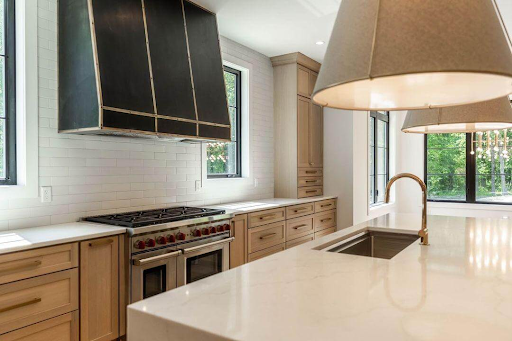
White oak cabinetry has established itself as the premier choice for anyone balancing natural atmospheric warmth with modern durability. It is tough. But it is also inviting. This guide breaks down exactly why this wood species is currently trending, walks you through selecting the ideal grain cut, and outlines practical ways to style it for a kitchen renovation that will stand the test of time.
Kitchen design is moving away from the era of stark, sterile white. We are seeing a refreshing return to warmth. At JWQ Cabinetry, our white oak cabinetry captures this perfectly. It balances organic textures with modern lines. With neutral undertones and a distinct grain, these cabinets serve as a sophisticated foundation for any renovation or new build (giving you flexibility regardless of the project scope). You get a space that feels grounded. Yet airy.
That said, while the visual appeal is immediate, the real value lies in what you can’t see from a distance.
Why Choose White Oak? Durability Meets Timeless Style
To understand why, you have to look at the physics of the wood itself. White Oak sits high on the Janka Hardness Scale. It doesn’t just sit there; it significantly outperforms softer options like Poplar or Pine. For a high-traffic kitchen, this density is non-negotiable.
It means your cabinets resist dents and scratches. They stand up to the daily grind of family life without failing. But hardness is only half the story.
Stability is the real hero here. While other wood species have a frustrating tendency to warp or swell the moment humidity levels rise, white oak stays put. It holds its ground. We rely on this material for its natural rot resistance and unique closed-cell structure (which effectively acts as a barrier against water). That specific density is exactly why we view it as the most reliable option for the wettest zones in your home. The reality is that kitchens and master baths are high-moisture environments. This wood handles the steam and the inevitable splashes without compromising its form.
You might be wondering if this popularity is just a hype cycle. It isn’t. While “fast fashion” designs fade, the organic warmth of white oak remains a permanent fixture in high-end design. It is an investment in longevity. That said, maximizing that strength (and beauty) requires specific attention to exactly how the grain is cut.
Mastering the Grain: Rift Sawn vs. Quartersawn vs. Plain Sawn
The way a log gets milled dictates the personality of your kitchen. It changes the entire vibe.
If you pick up a standard piece of lumber, odds are it is plain sawn. By slicing the log tangentially against the growth rings, this technique creates those signature “cathedral” arches and heavy swirling patterns in the grain. It is highly efficient. Cost-effective, too. But consider the scale. When you apply such a dominant pattern across a full run of upper and lower cabinets, the overall effect can become visually heavy (or simply too traditional) for the aesthetic you are trying to achieve.
For the clean aesthetic demanded by modern styles, rift sawn is generally the gold standard. It creates this tight, linear grain by sawing at a specific angle to the growth rings rather than slicing straight through. No arches here. Just straight, uniform lines. By reducing visual “noise,” this cut allows the natural wood tone to anchor the kitchen’s look without overpowering it.
Quarter sawn offers a different flavor entirely. It produces a straight grain similar to rift cuts but exposes medullary rays, those distinctive “flecks” or ribbons across the surface. Because rift and quarter sawn techniques create more waste (yielding less usable wood per log), they naturally command a higher price point than plain sawn alternatives.
The cut you choose sets the stage for everything else, acting as the foundation for your specific design aesthetic.
Styling Your Kitchen: From Japandi to Organic Modern
Think of this material as a design chameleon. It adapts. Because it carries those subtle neutral undertones, White Oak does the heavy lifting when it comes to anchoring today’s most requested trends. It brings a necessary warmth to Scandinavian minimalism. Without it, those clean lines can often feel cold. Or even sterile.
For the Japandi enthusiasts out there, blending rustic Japanese textures with Nordic functionality, this wood species feels practically mandatory.
But valid concerns regarding color stability often pop up. Will these cabinets turn yellow over time, resembling the floors in an old gymnasium? That fear is understandable. (We have all seen those 90s kitchens). However, unlike the honey-orange oaks of decades past or the heavy cherry stains that instantly date a home now, modern white oak keeps its crisp edge.
Water-based matte sealers – these finishes effectively lock in the raw, organic look without the ambering effect that is typical of oil-based topcoats. The color stays true. That said, if you want even more dimension, a cerused finish offers a sophisticated (and highly sought-after) weathered aesthetic. By rubbing white wax into the open grain, it highlights the natural texture while keeping the overall tone cool. And contemporary. You are left with a durable, neutral canvas ready for your final layer of design.
Curating the Look: Countertops, Hardware, and Colors
Styling white oak requires a certain level of discipline. You want that organic texture to remain the hero of the space (rather than competing with it). Go with crisp white quartz or marble with minimal veining. Avoid busy patterns. They fight for attention. Simple surfaces act as a quiet backdrop, allowing the detailed wood grain to take center stage.
Then there is the hardware. Matte black pulls create a sharp, modern contrast that feels grounded. If you want something different, try unlacquered brass. It adds a layer of warmth and elegance that is almost impossible to replicate. When painting the walls, our best advice is to choose colors that wrap the room in a similar softness, like warm whites or gentle greiges. This actually mirrors the massive industry shift we have watched unfold recently. Even distinct voices like Joanna Gaines have moved away from stark all-white palettes, opting instead for natural woods paired with creamy neutrals to create spaces that feel genuine. The result is a cohesive, lived-in atmosphere found in world-class designs.
Investment Value: Is White Oak Cabinetry Expensive?
White oak carries a reputation for being pricey. It is a premium hardwood, after all. But achieving that high-end organic modern aesthetic doesn’t actually require a custom shop budget.
The final price tag usually depends on your acquisition strategy. If you go to a custom shop, you are paying for premium materials plus expensive artisanal labor. Big box stores are another story. There, you generally pay retail markups on units that are already put together.
Easy Assembly & Professional Installation Support
Do not confuse “Ready-to-Assemble” with cheap construction. You are working with high craftsmanship materials. When you assemble our dovetail drawers or install the heavy-duty soft-close hinges, you will feel that quality immediately. This is solid wood and reinforced joinery. Not flimsy particle board.
What you get is a factory-finished product that rivals custom carpentry (often at a fraction of the cost) while staying at a wholesale price point. Your effort yields a high-end foundation ready for everyday life.
White oak cabinetry delivers lasting durability and style versatility without the custom price tag. Contact us now. We bring this accessible luxury directly to your door. Why wait?