
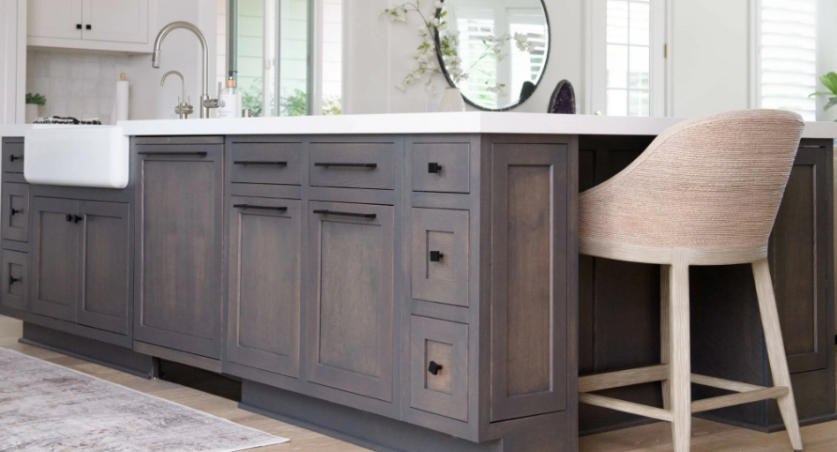
Inset cabinets offer a timeless, high-end aesthetic, with doors and drawers that sit flush within the cabinet frame. This guide explores the unique characteristics, costs, and design considerations of inset cabinetry, helping you decide if this classic style is the perfect fit for your home. We’ll cover everything from pros and cons to a direct comparison with overlay styles.
Picture a kitchen with flawless, uninterrupted lines. The effect is immediate. Each cabinet door and drawer front sits perfectly inside the cabinet frame, a small detail that makes a very big impact. The result is a clean, furniture-like appearance. It’s a design that stands as a quiet testament to quality craftsmanship, and that timeless look is the signature of inset cabinets.
To help you decide whether this classic design is the right choice for your home, we at JWQ Cabinetry put together this guide that covers everything you need to know, from the aesthetic benefits to the practical budget considerations. The good and the bad. So, what exactly makes an inset cabinet different from any other?
What Exactly Are Inset Cabinets?
When it comes to inset cabinetry, the name really says it all. The door and drawer fronts are built to sit inside the cabinet’s frame, fitting perfectly flush with the face. Think of it as a piece of custom-built furniture. This is a clear departure from the more common overlay styles you often see, where the door simply rests on top of the cabinet box, covering up the frame either partially or completely.
That flush, furniture-like appearance is no easy thing to create. It requires exacting precision from our craftsmen, because the narrow gap around the entire door must be perfectly consistent; we’re talking about the width of a nickel. There is zero room for error. This meticulous approach to construction is what produces that clean, smooth plane, a finish that highlights the cabinet’s structure and brings a timeless, sophisticated feel to any space.
The hardware you select goes a long way in defining the final style. You can choose concealed hinges that disappear completely for that seamless, modern aesthetic. Total minimalism. Or, for a more traditional look, exposed barrel hinges add a certain vintage character that many people love. While the visual appeal is undeniable, this unique construction method comes with its own set of advantages and disadvantages that are worth considering.
The Pros and Cons of Choosing Inset Cabinetry
While the visual appeal of inset cabinetry is hard to argue with, its unique construction brings both advantages and potential drawbacks. We want to be transparent about them. That’s how you’ll make the best choice for your home.
The main draw is that sophisticated, furniture-like quality. It’s all about the clean, uninterrupted lines that have defined high-end craftsmanship for centuries, creating a timeless look that invests in your home’s long-term character. A real statement. But the design offers a practical advantage, too. Because the door sits flush inside the frame, the edges are neatly protected from the inevitable bumps and scrapes of a well-lived life.
Of course, there are trade-offs to consider. That same interior frame that creates the signature look does occupy a small amount of space, slightly reducing usable storage compared to frameless or full-overlay cabinets.
Wood naturally expands and contracts with changes in humidity. With lesser-quality cabinets, this movement can cause doors to stick or rub against the frame. An annoying problem, to be sure.
That meticulous craftsmanship does come at a price. Inset cabinetry is a greater investment, a reality that often leads homeowners to weigh its benefits against those of another popular choice and to create a direct comparison with overlay doors. So, is one choice simply better? No. The right fit depends entirely on your priorities for style, space, and budget.
Inset vs. Overlay Cabinets: Which is Better for Your Kitchen?
Aesthetically, these styles are worlds apart. Inset cabinetry gives you that classic, furniture-like appearance. The door and drawer fronts sit flush within the cabinet frame, leaving the frame itself exposed to view. This is what creates those crisp lines and clean shadows.
Full overlay is a different approach entirely. Here, the doors sit on top of the cabinet box and cover the frame, resulting in the kind of seamless, continuous facade you see so often in modern (and even transitional) kitchens.
But the practical differences are just as important. Since overlay doors don’t need to squeeze inside the cabinet box, you gain a slight advantage in storage space. It’s a small thing, but it can matter. Then you have the installation itself. The perfect, gap-free alignment of an inset door demands a very high level of precision from craftsmen and installers. There is simply no room for error. Your choice also affects hardware; inset styles offer more flexibility for your specific design vision, while overlay cabinets rely on concealed hinges to maintain that uninterrupted facade.
Your decision will eventually balance visual preference with practical function. But for many homeowners, the conversation steers toward one final, critical factor. Price. The difference in craftsmanship and installation often translates to a difference in the final bill. So are inset cabinets really more expensive? In almost every case, yes. Inset cabinets almost always carry a higher price tag than their overlay counterparts.
Understanding the Cost: Are Inset Cabinets More Expensive?
So what’s driving that cost?
It really boils down to craftsmanship. To get that perfectly flush look, a door has to fit precisely inside its frame, leaving a gap that’s only a hair’s width. That requires an exceptional level of precision from our manufacturing team. It also means the installation is a much more time-consuming and delicate job.
That higher degree of skill and labor is what ultimately contributes to the final investment.
Designing with Inset Cabinets: Bringing Your Vision to Life
Now for the fun part. This is where we begin turning your ideas into a real, tangible space.
A lot of people hear “inset cabinets” and immediately imagine something very traditional. And yes, they excel in that setting. But their true strength lies in a surprising versatility, proving that the final look isn’t about the cabinet style itself.
It’s all about how you dress it.
The final aesthetic really comes down to the door profile, the wood species, and the hardware you select. Those are the elements that define the space. We’ve seen them allow inset cabinets to anchor a warm farmhouse kitchen just as successfully as they can create a clean, transitional design.
Key Takeaways: Are Inset Cabinets Right for You?
So how do you decide what’s right for your home?
Choose Inset If…
You value a timeless, high-end look. You appreciate the subtle details that can only come from precision craftsmanship. For you, inset is a premium investment in your home’s lasting character.
Consider Overlay If…
Maximizing every inch of storage is the primary goal. It’s also the practical path if you’re working with a tighter budget. Or perhaps you just simply prefer a more contemporary, seamless appearance for your space.
Ready to explore your options? With over 10 years of experience crafting premium wholesale cabinetry, our New Jersey-based team understands the nuances that make each style special. We provide factory-direct pricing without compromising on quality. Our nationwide network of dealers can show you actual samples, discuss customization options for bulk orders, and help you visualize how each style would work in your specific space. Visit JWQ Cabinetry today to browse our collections, or find a dealer near you for personalized guidance on making the right choice for your home.