
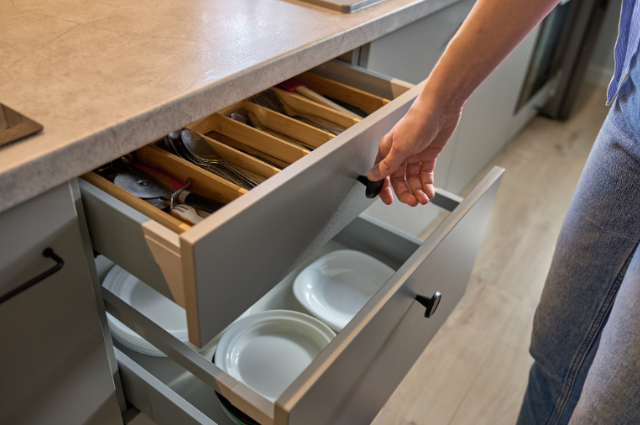
Upgrading to soft close cabinet hinges is one of the most impactful, yet simple, improvements you can make to your kitchen or bathroom. This comprehensive guide from JWQ Cabinetry will walk you through everything from selecting the right hinges to installation and troubleshooting. Discover how this small change delivers a significant daily difference in function and feel.
We all know the sound. The sharp, jarring bang of a cabinet door slamming shut. It instantly shatters the peace.
At JWQ Cabinetry, we believe your kitchen should be a haven, not a source of sudden noise.
That’s where soft close cabinet hinges come in. This small piece of engineering brings a quiet elegance to your daily routine, and we see this affordable upgrade as more than just a luxury. It’s a practical improvement that enhances your space every single day. We’ll show you how to choose and install them while exploring the real benefits that stretch far beyond a satisfying silence.
Beyond the Quiet: The Tangible Benefits of Soft-Close Hinges
Inside every soft-close hinge is a small hydraulic damper. It’s a simple concept, really. But the returns are anything but. This mechanism activates when the door gets about two inches from the frame, smoothly guiding it to a completely silent close.
That controlled motion does more than just eliminate noise. It protects your cabinet doors and surrounding frames from the daily stress of hard closures, extending their lifespan and preserving your investment.
For families, it also means no more pinched fingers.
We’re often asked if this upgrade is worth the cost. Our answer is always a firm yes. You aren’t just buying quiet; you’re getting durability and a touch of daily refinement you’ll appreciate every single day.
One thing to be careful about: don’t confuse this technology with a similar-sounding feature known as the self-closing hinge.
Soft-Close vs. Self-Close Hinges: A Critical Distinction
While often confused, soft-close and self-close hinges serve distinctly different purposes in cabinet hardware.
Self-close hinges automatically pull cabinet doors shut when they reach approximately 20-30 degrees from the closed position, using spring tension to complete the closing motion. This ensures doors don’t remain ajar but offers no speed control – doors close at whatever force the spring mechanism provides.
Soft-close hinges, conversely, incorporate hydraulic dampers that control the closing speed, preventing slamming regardless of how forcefully the door is pushed. These hinges engage in the final few inches of travel, decelerating the door to a gentle, quiet close. Many modern soft-close hinges also include self-closing functionality, combining both features.
The distinction matters for several reasons:
- Noise reduction: Soft-close mechanisms eliminate the jarring sound of slamming cabinets
- Longevity: Controlled closing reduces wear on both hinges and cabinet frames
- Safety: Soft-close prevents finger pinching, particularly important in homes with children
- Cost considerations: Self-close hinges are typically 30-50% less expensive than soft-close variants
Understanding this difference ensures proper selection based on specific needs, budget constraints, and desired functionality.
How to Choose the Perfect Soft-Close Hinges for Your Cabinets
Choosing the right soft-close hinges isn’t complicated. It’s a process. From our experience, you just need to confirm these details about your cabinets before making a purchase. First, identify your cabinet type: do you have face-frame cabinets, with a visible wood frame around the front opening, or are they frameless? Once you’ve settled that, you’re ready for the upgrade. We get this question: Can you add soft-close hinges to your existing cabinets? Yes. In fact, it’s one of the most satisfying DIY projects you can tackle in a weekend (and one of the quickest ways to make your kitchen feel brand new).
Installation Guide: Adding Soft-Close Hinges to New or Existing Cabinets
The process is straightforward:
First, carefully remove the cabinet door and its old hinges. With the door off, use your new hinge as a template to measure and mark its position. This single step is the most important for proper alignment. Don’t rush it. If the screw patterns don’t match the existing holes (which is common), just drill small pilot holes to create a new fit. We always find it’s best to attach the new soft-close hinges to the door itself first. With that done, you can mount the door back onto the cabinet frame and secure it.
How to Adjust Soft-Close Hinges
Getting the alignment just right is what delivers that polished, professional look. Hinges typically feature three adjustment screws. One moves the door up and down, another shifts it left or right, and a third screw controls the depth, moving it in or out from the frame. This precision allows you to create perfect, even gaps between doors. Some hinges also include a mechanism to fine-tune the closing speed for lighter or heavier doors.
A successful installation depends on having the right components, which brings up an important question about budgeting.
Budgeting Your Project: Cost, Quantity, and Alternatives
The first thing on everyone’s mind is the budget. For hinges, the cost breaks down into a few tiers. Standard hinges are easily the most affordable option. Self-closing models sit just a step above that in price. If you want a premium feel, however, you’ll be looking at soft-close hinges, which are a bigger investment.
Next up is quantity. How many hinges will you actually need? For most standard doors (anything up to 40 inches tall), two hinges will do the job. Once you get into taller doors, from 40 to 60 inches, you’ll need to use three to prevent warping and stress on the frame. But what happens if a complete hinge replacement isn’t feasible right now?
You can still get that gentle close. Soft-close dampers are small, separate devices that mount inside the cabinet frame and cushion the door, which means you can keep your existing hinges. It’s a great workaround. As you plan your project, it helps to know what to expect with timelines.
Both integrated hinges and add-on adapters will achieve that quiet close you’re after. The real difference comes down to their unique installation needs and the potential adjustments each one requires.
Troubleshooting Common Issues & Disadvantages
Even the best hardware can act up now and then.
What some people call the “disadvantages” of soft-close hinges are, from our perspective, almost always just simple fixes. There are no fundamental flaws in the technology. There are setup problems.
So, a cabinet door isn’t closing softly anymore. What do you do? First, check for any obvious obstructions blocking the door’s path. If you find nothing in the way, the next step is to confirm the right number of hinges is being used for the door’s weight. The final fix is usually an adjustment to the closing tension. Many hinge models let you do this with a screw or switch, and making that small tweak often resolves the problem completely.
Key Takeaways: Your Next Step to a Better Kitchen
Soft-close hinges add quiet luxury and lasting value to your cabinets. The right ones are simple to select and install. This small upgrade makes a significant difference.
At JWQ Cabinetry, we understand that quality hardware is just as important as the cabinets themselves. As a family-owned New Jersey manufacturer with over 10 years of experience, we provide not only premium wholesale cabinetry but also the professional-grade accessories that complete your vision. Our soft-close hinges are carefully selected to complement our Shaker, Concorde, Athens, and Legend collections, ensuring seamless integration and reliable performance. Whether you’re upgrading existing cabinets or planning a complete renovation, our nationwide network of dealers and expert team can guide you through hardware selection that matches your style and budget. Visit JWQ Cabinetry today to explore our full range of cabinet features and accessories, or find a dealer near you for personalized assistance.