
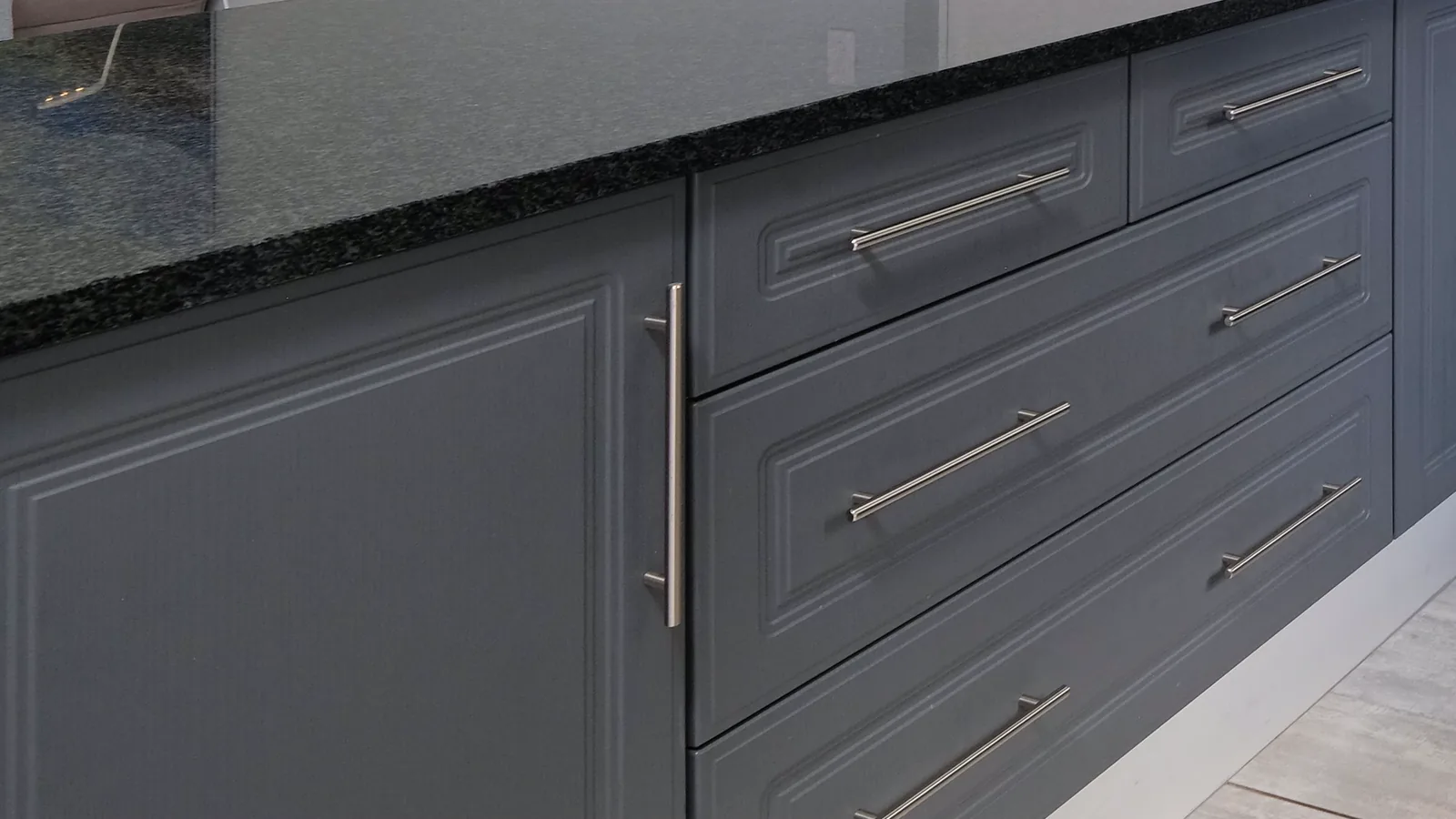
Quick answer: HDF and MDF are fiber-based wood panels, but those labels do not establish a universal winner for cabinet doors. Density, fiber furnish, resin, pressing, machining, coating, edge treatment, and whole-door construction can all change performance. Compare the named panel and finished-door specification, then verify moisture limits, testing, warranty terms, and collection availability.
What MDF and HDF labels tell you
MDF commonly refers to medium-density fiberboard. HDF commonly refers to a higher-density fiber panel, although suppliers do not always use the term in exactly the same way. A buyer should ask for the panel manufacturer’s identity and technical data rather than assume that every HDF or MDF board shares one recipe.
The material name also says little about the complete door. A door might be a one-piece routed panel, a five-piece assembly, or a frame with a separate center panel. Two products can use MDF in different places and perform differently as finished doors.
How fiber panels are made
Fiber panels use refined wood fibers combined with a binder, formed into a mat, and pressed under controlled conditions. The furnish, resin, pressing schedule, thickness, and target properties can vary by product.
The USDA Forest Products Laboratory chapter on wood-based composites explains that composite materials can be changed through material selection, arrangement, and processing. That is why one broad label cannot replace a current data sheet.
Why whole-door construction changes the comparison
A door specification should identify more than the panel category. Useful details include:
- Whether the door is one piece or assembled from rails, stiles, and a center panel
- The material and thickness used in each part
- Machined profiles, edge preparation, and fastening or bonding methods
- Primer, paint, topcoat, and curing requirements
- Approved dimensions and any limits tied to the warranty
These details affect how the door is machined, finished, handled, installed, and maintained.
Painted finishes and edge preparation
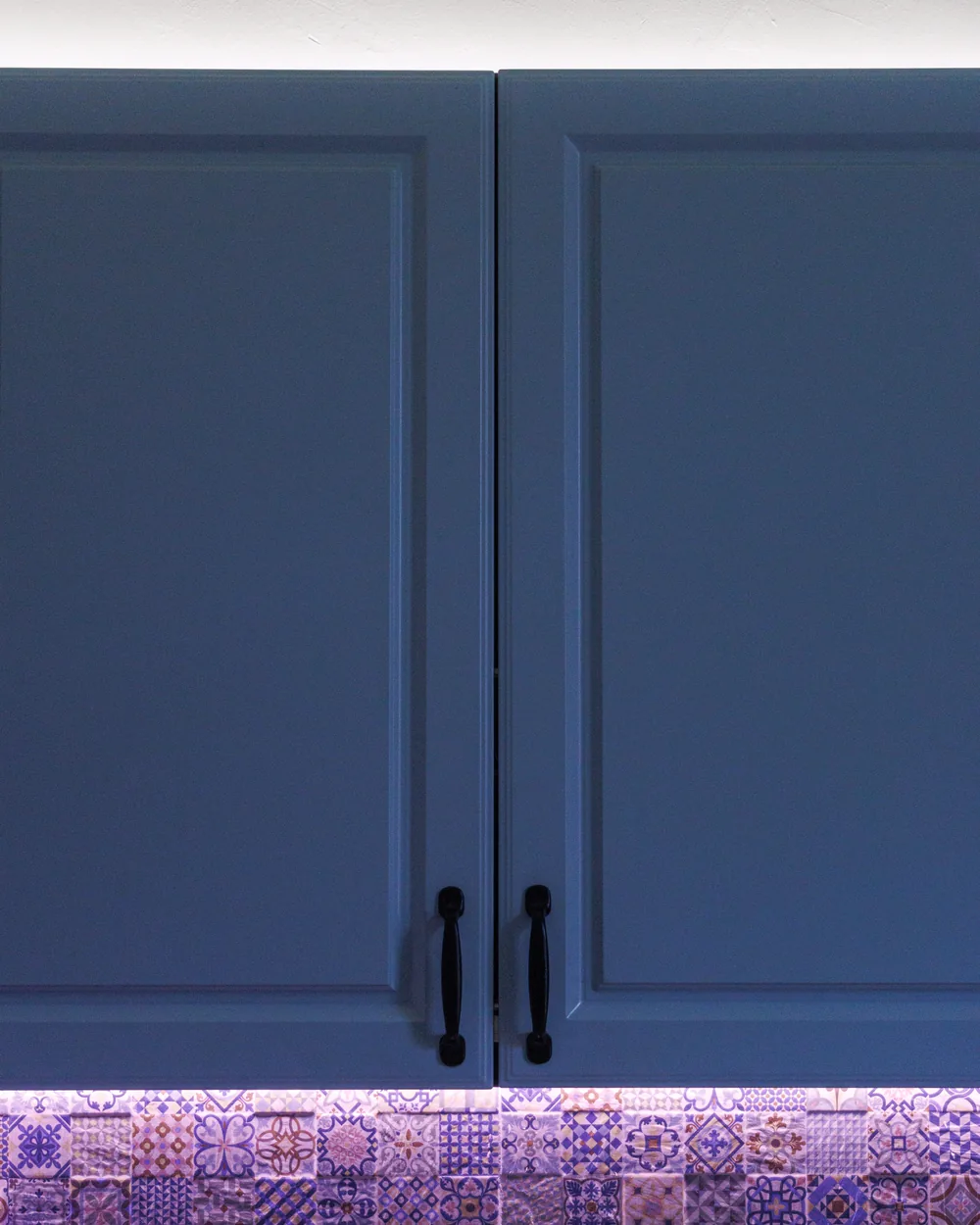
Fiber panels can provide a smooth surface for painted work. The finished result still depends on tool condition, profile geometry, sanding, edge sealing, primer compatibility, coating thickness, and cure.
An HDF label does not guarantee a cleaner edge, and an MDF label does not prove a weak finish. The shop process and approved coating system belong in the comparison.
Moisture and dimensional behavior
Wood and wood-based materials exchange moisture with the surrounding air. The USDA chapter on moisture relations explains that moisture content can affect physical properties and performance.
For a cabinet door, ask how the panel, machined edges, coating, and installation environment work together. Neither HDF nor MDF should be called waterproof as a category. A product’s moisture-resistance claim must come from its current manufacturer documentation and remain within the stated test and warranty scope.
Mechanical properties, adhesives, and documentation
The USDA chapter on mechanical properties of wood-based composites treats fiberboard, MDF, hardboard, and other panels as categories whose properties need to match the intended use. It does not say that every higher-density panel wins every test.
A sound submittal may include:
- Panel manufacturer and product name
- Thickness and density stated by that manufacturer
- Relevant dimensional, strength, moisture, or emissions test documents
- Adhesive and coating-system information where applicable
- Door-size limits, care instructions, and warranty exclusions
Density is one property. It does not independently prove screw holding, impact performance, finish quality, service life, or compliance.
How current product specifications use MDF
JWQ’s current Athens Snow specifications describe the door and drawer front as premium MDF. Other JWQ lines use different constructions. A five-piece door may use solid-wood rails and stiles with an MDF center panel, which is a different statement from calling the whole door MDF.
Those examples show why the selected collection controls. They do not confirm that JWQ currently offers an HDF door, and they do not turn the term premium into an independent test result.
Questions trade buyers should ask
Before approving a painted cabinet door, confirm:
- What is the exact door style and collection?
- Which material is used in the face, edge, rails, stiles, and center panel?
- Which finish system and care instructions apply?
- What moisture, size, installation, and warranty limits are documented?
- Which samples and technical sheets match the order being placed?
Dealers and contractors can review current JWQ cabinet collections and request the documents for the selected line. Keep the approved sample, product page, order acknowledgment, and technical information together so a material label is never asked to carry the whole specification.